
Views: 0 Author: MATT Publish Time: 2026-01-16 Origin: Site


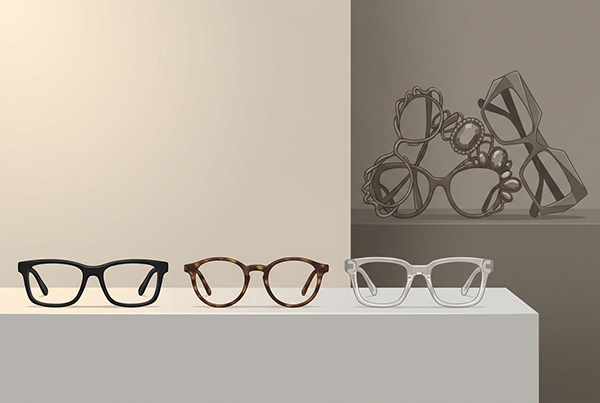
Every optical store owner faces the same dilemma: frames that look stunning on the display but gather dust on the shelf. The harsh reality of retail eyewear is that design appeal doesn't always translate to sales performance.
The shift toward commercial thinking is accelerating. Shelf space costs money. Cash tied up in slow-moving inventory limits your ability to respond to market demand. And in an industry where customers need functional eyewear first and fashion statements second, a frame doesn't need to be unique—it needs to fit most customers.
High-design frames might win awards, but commercial frames pay the bills. Understanding this distinction is the first step toward building a profitable, sustainable eyewear business. For wholesale glasses frames buyers and optical retailers alike, sellability isn't just a metric—it's a survival strategy.
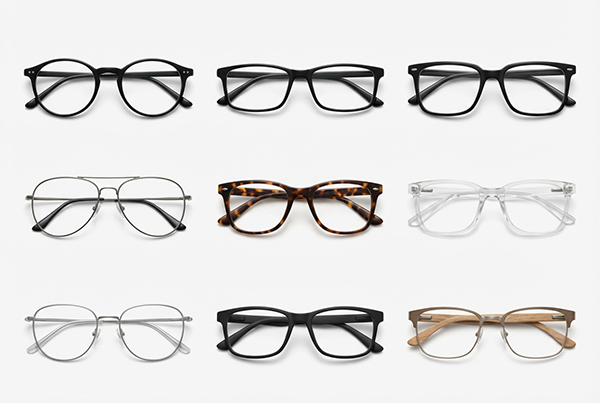
Sellable frames share common commercial DNA. These aren't arbitrary design choices—they're proven factors that reduce friction in the buying process and increase conversion rates.
Medium lens widths (typically 48-54mm) accommodate the broadest customer base. Extreme sizes—whether oversized fashion statements or ultra-compact designs—immediately exclude potential buyers. When customers try on frames, fit is the primary decision factor. Frames that fit more faces sell more consistently.
Gender-neutral styles solve a fundamental inventory problem: they reduce SKU pressure while maximizing stock utility. For wholesale eyewear buyers operating with limited capital, unisex frames mean every piece in inventory can potentially serve any customer. This flexibility accelerates turnover and simplifies reordering.
Lightweight materials like acetate and titanium improve first-fit acceptance. Heavy frames are rejected at the counter regardless of aesthetics. Comfort isn't secondary—it directly correlates with lower return rates and higher customer satisfaction, both crucial for repeat business.
Black, tortoise, and neutral tones consistently outperform bold colors across demographics. Safer colors equal faster inventory turnover. While vibrant frames may attract attention, neutral options close sales. Data from established optical retailers shows that 70-80% of prescription eyewear sales come from classic color palettes.
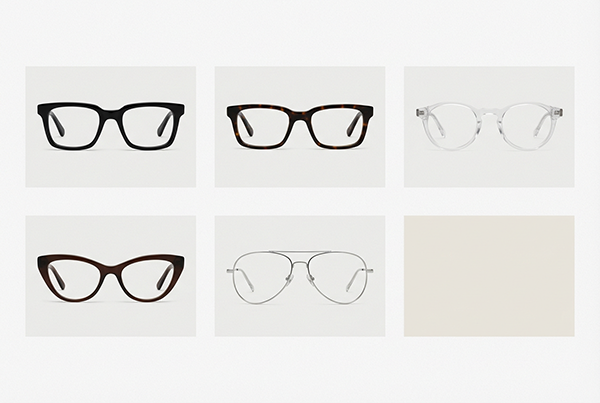
Not all popular styles perform equally in real retail environments. Sellability depends on matching frame shapes to actual customer demand, not Instagram trends.
Square and rectangular frames dominate daily prescription sales. Their professional appearance and face-flattering geometry make them safe choices for working adults—the core demographic for prescription eyewear.
Round frames with controlled proportions offer vintage appeal without alienating conservative buyers. The key is proportion: slightly oval or softly rounded shapes sell better than perfect circles, which have limited facial compatibility.
Cat-eye frames serve selective women's markets effectively but require careful demographic matching. In areas with younger, fashion-conscious customers, they perform well. In markets skewing older or more conservative, they underperform.
Aviator metal frames maintain mass appeal across age groups and genders. Their lightweight construction and adjustable nose pads solve fit challenges that plague plastic frames.
Regional demand and customer demographics significantly influence these patterns. Urban stores may see stronger performance from bold shapes, while suburban and rural locations favor classic designs.
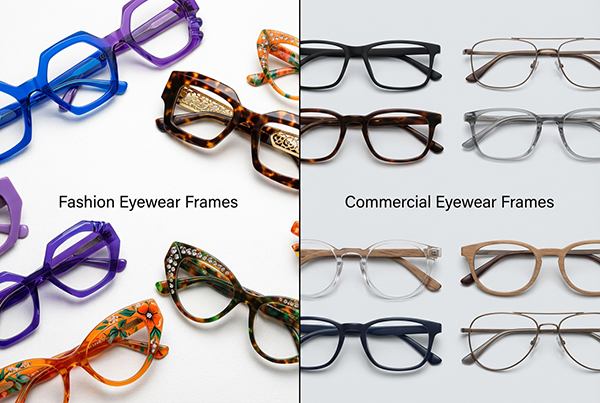
Fashion frames attract attention—commercial frames generate cash flow. This isn't a criticism of fashion-forward design; it's an acknowledgment of different business purposes.
Fashion frames offer higher margins but slower turnover. They appeal to a narrower customer segment willing to pay premium prices for distinctive style. The risk: what's trendy this season becomes dated inventory next season.
Commercial frames provide stable demand and repeat orders. These workhorse styles—the reliable squares, ovals, and aviators—may lack excitement, but they sell predictably. For wholesale glasses frames buyers, commercial styles support consistent cash flow and minimize discount pressure.
The optimal inventory strategy balances both:
· 70-80% core commercial models for volume and stability
· 20-30% limited fashion pieces for margin testing and brand differentiation
This ratio protects cash flow while allowing experimentation. Fashion pieces shouldn't dominate your capital allocation—they should enhance a solid commercial foundation.
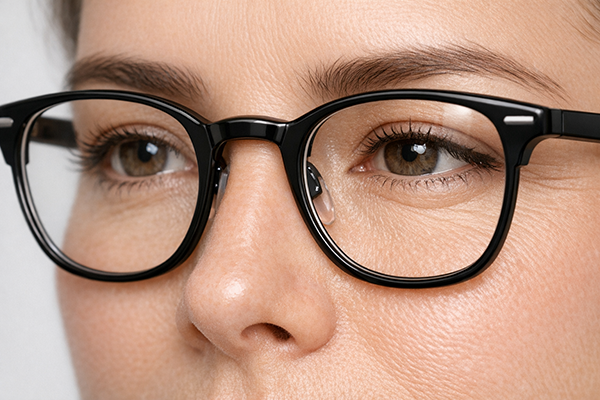
Many frames fail not because of design—but because of fit. Bridge size, often overlooked in purchasing decisions, determines try-on success rates.
An incorrect bridge width creates immediate rejection. Too narrow, and the frame sits uncomfortably on the nose. Too wide, and it slides down or sits awkwardly on the face. Either way, the customer moves to the next option.
Neutral bridge sizing (typically 16-19mm for adult frames) improves unisex compatibility and increases the percentage of successful try-ons. For wholesale eyewear buyers, this seemingly minor specification has major commercial implications: better fit equals higher conversion rates.
When evaluating frames for purchase, verify bridge dimensions against your customer demographics. Asian-fit bridges (typically 17-21mm with lower positioning) may be essential in certain markets but irrelevant in others. Matching bridge sizing to your actual customer base is a simple way to improve sellability.
Sellability isn't just about first sales—it's about reorders. Frames worth long-term shelf space demonstrate consistent performance across multiple metrics.
Sell-through rate measures how quickly inventory moves. A healthy sell-through rate (60-80% within 90 days for commercial frames) indicates sustainable demand.
Reorder frequency reveals which styles customers actually want. If you're restocking a frame every quarter, it's proven. If it sells once and never again, it doesn't belong in your core assortment.
Return rate serves as a warning signal. High returns indicate fit problems, quality issues, or mismatch with customer expectations. Frames with return rates above 5-10% should be evaluated carefully before reordering.
Use sales data to forecast future demand. Track which shapes, colors, and sizes move fastest in your specific market. This data-driven approach removes guesswork from purchasing decisions and builds a self-optimizing inventory that grows more profitable over time.
Spot sellable frames quickly: Look for medium sizing, neutral colors, comfortable materials, and proven shapes. If a frame checks these boxes, it's likely to perform.
Avoid over-stocking risky designs: Limit experimental purchases to 10-20% of order value. Test fashion-forward styles in small quantities before committing to volume.
Work with stock-frame suppliers: Suppliers offering low MOQ and fast restock cycles reduce risk dramatically. You can test styles without large capital commitments and reorder proven sellers quickly. This flexibility is especially valuable for independent stores and online sellers working with limited cash flow.
Monitor competitive inventory: Visit successful local stores and analyze online bestsellers. Competitive intelligence reveals what's actually selling in your market, not what's trending on social media.
Prioritize suppliers with diverse bridge sizing: This often-overlooked detail expands your addressable market and reduces fit-related returns.
Frames that sell consistently build stronger businesses than frames that only look impressive. The path to profitability in optical retail isn't found in chasing design trends—it's built through systematic selection of proven, commercial eyewear.
By focusing on fit, proven shapes, neutral colors, and reorder stability, wholesale glasses frames buyers and optical retailers can create predictable sales and sustainable growth without over-investing in risky designs.
Sellability is a discipline. It requires resisting the allure of fashion-forward novelty in favor of data-driven commercial logic. But for businesses that master this approach, the rewards are clear: higher turnover, lower inventory risk, and a self-sustaining assortment that grows more profitable with each reorder cycle.
The best frame collection isn't the most beautiful—it's the one that sells.


